
by Tony Whitehead, Dartmoor Environmental Campaigner
“In summary, the Court has found that the Council has failed to carry out a lawful and meaningful assessment of the number of animals which can properly be depastured on the commons from time to time. In due course we will receive a mandatory court order requiring us to do so. This has significant implications for the Council’s work going forward.” — Minutes of the Dartmoor Commoners’ Council meeting, 25 March 2026
As the recent furore over Dartmoor’s ponies has demonstrated, there are no winners when complex environmental issues are reduced to simplistic narratives. In deciding to remove hill ponies from stocking rate calculations, the Government appears to have responded more to the strength of public reaction than to any detailed, evidence-based assessment of the ecological role of these animals within Dartmoor’s grazing system. Much of that public debate was driven by assumptions about what might happen, anecdotal accounts of likely consequences and assertions of intent for which little direct evidence was produced. Yet determining appropriate grazing levels for one of Europe’s most important protected landscapes demands precisely the opposite: careful assessment, robust evidence and transparent decision-making. Ensuring the right grazing levels for Dartmoor’s precious habitats is not easy, but this decision has arguably made an already difficult task even harder.
Across our precious uplands, difficult conversations about grazing are essential. But those conversations must be informed by evidence and sound science. The recent High Court judgment in R (Wild Justice) v Dartmoor Commoners’ Council (2026) makes clear the importance of this principle and its application to all those charged by Parliament with managing England’s protected landscapes.
The judgment is one of the most significant environmental decisions affecting common land in England for many years. At its heart was a simple question: Had the Dartmoor Commoners’ Council, the statutory body responsible for regulating grazing on Dartmoor’s common land, carried out the assessment required by law of how many animals could properly be depastured on the commons?
The Court’s answer was unequivocal. It had not.
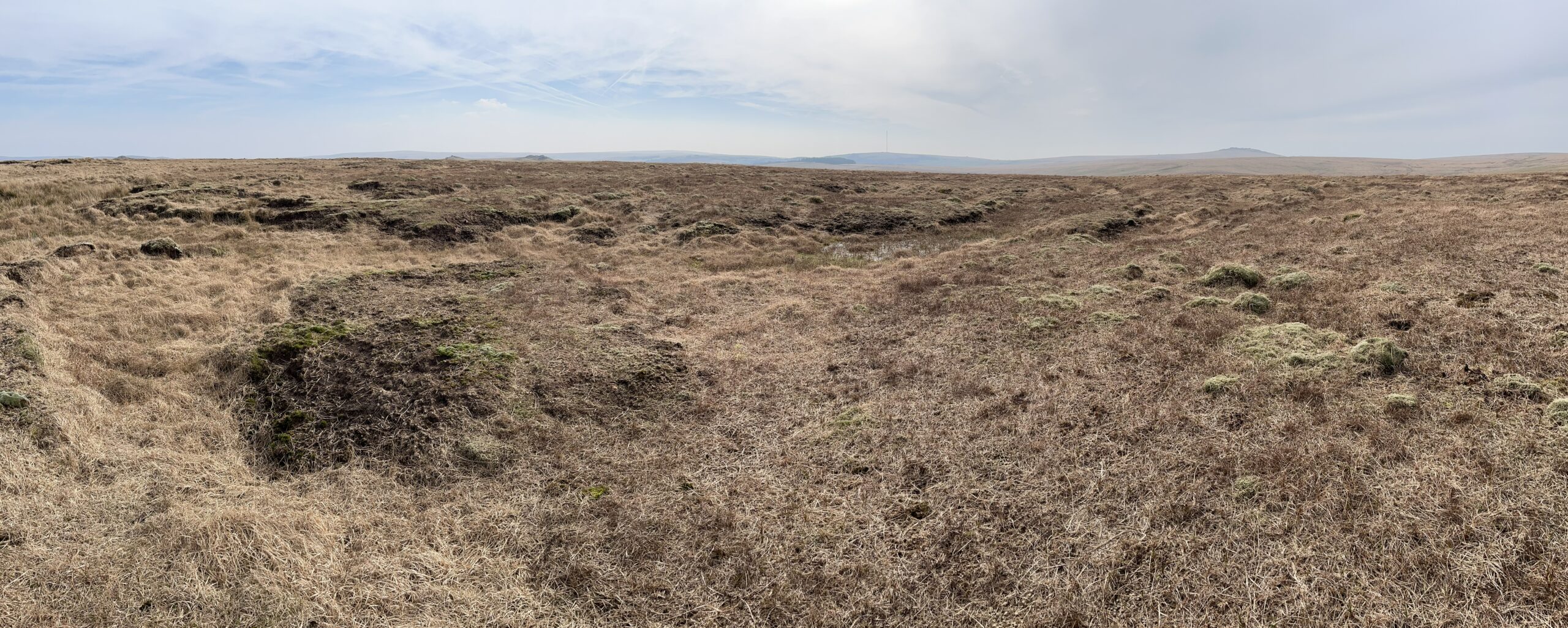
The case arose against the backdrop of growing concern over the ecological condition of Dartmoor’s internationally important habitats. Much of Dartmoor’s Commons are designated Sites of Special Scientific Interest and a Special Area of Conservation because of their blanket bogs, wet heath, dry heath and temperate rainforest. Yet Natural England’s most recent assessments found that only a tiny fraction of these protected habitats remain in favourable condition, with the overwhelming majority classified as unfavourable or declining. For many years, Natural England has identified inappropriate grazing pressure as one of the principal causes of this deterioration.
Against that background, the Court examined the Dartmoor Commons Act 1985. Section 4 requires the Commoners’ Council to assess “the number of animals which can properly be depastured on the commons from time to time”, while also having regard to the conservation and enhancement of the natural beauty of the commons. The legislation also gives the Council the power to issue limitation notices when grazing levels need to be reduced.
Wild Justice argued that the Council had failed to discharge this statutory duty despite long-standing evidence of ecological decline. Mr Justice Mould agreed. He concluded that no meaningful assessment had been undertaken capable of satisfying the obligation imposed by Parliament.
Importantly, however, the Court did not determine that Dartmoor is overgrazed, nor did it prescribe the correct stocking level. It did not favour one philosophy of land management over another, nor did it mandate habitat restoration by judicial decree. Instead, it held that no lawful, evidence-based assessment had been carried out from which such decisions could properly be made.
That distinction is fundamental. The significance of the judgment lies as much in what it does not say as in what it does. Decisions about grazing remain matters for the statutory regulator, not the courts. But where Parliament has imposed a legal duty to make those decisions on the basis of proper assessment, that duty must be fulfilled.
In reaching that conclusion, the judge was particularly critical of the Council’s reliance on anecdotal evidence, observing that there was “no explanation as to how such essentially anecdotal evidence could sensibly found determination” of whether the commons were overstocked, sustainably stocked or understocked.
This was not a rejection of local knowledge or generations of practical experience. Such knowledge may inform regulatory decision-making and remains a part of understanding the moor. The Court’s point was different. Where Parliament requires a statutory assessment, anecdote and custom cannot substitute for it. Local knowledge and cultural traditions may contribute to an evidence-based process, but they cannot replace it.
The judgment transforms what some had regarded as an aspirational responsibility into a clear legal obligation. The Commoners’ Council must gather evidence, undertake a robust assessment and be able to explain and justify its conclusions. Assumptions or informal consensus are no substitute for the statutory process Parliament has required.
These obligations, enforced by the judgment, have existed since the Dartmoor Commons Act 1985 came into force. What the Court did was confirm that those duties are legally enforceable and that compliance can be scrutinised by the courts where a public body fails to discharge them.
The implications extend well beyond Dartmoor. The judgment reinforces a broader constitutional principle of environmental law. Where Parliament entrusts public authorities with the protection of nationally important landscapes, those responsibilities are not merely aspirational. They are legal duties that can be enforced through judicial review. Public bodies exercising environmental functions must be able to demonstrate clear, reasoned and evidence-based decision-making. That broader principle may ultimately prove to be the judgment’s most enduring legacy.
For Dartmoor itself, the consequences could be profound. The Court has required the Commoners’ Council to complete the assessment it has long been obliged to undertake. Only once that exercise has been completed can informed decisions be made about whether existing grazing levels remain compatible with the conservation objectives for the commons, and whether limitation notices or other regulatory measures are required.
The judgment does not itself alter grazing levels. Indeed, the Judge rejected Wild Justice’s challenges that the Commoners Council had wrongly failed to issue limitation notices and thus was in contravention of related environmental laws. There is a logic to this – how could it issue limitation notices when it has not carried out proper assessments of how many animals could be properly depastured on the commons? Rather, the judgment requires that future decisions about grazing be made lawfully, transparently, and on the basis of evidence, not assumptions or anecdotes. Anything that falls short of this risks further legal challenge.
Those decisions may have significant consequences for nature restoration. They may demonstrate that grazing levels are appropriate in some places and require adjustment in others. The important point is that such conclusions must now rest on a lawful evidential foundation.
In its council meeting following the judgment, the Commoner’s Council acknowledged that this would have “significant implications” for its future work. That acknowledgement underlines the importance of the Court’s decision. This was not simply a disagreement between campaigners and regulators, but recognition by the regulator itself that fundamental statutory duties must now be fulfilled.
The case also demonstrates the continuing importance of strategic environmental litigation. By asking the Court to interpret and enforce statutory obligations that had existed for decades, Wild Justice secured clarification of responsibilities that will shape the future management of one of England’s most celebrated protected landscapes.
At a time when the United Kingdom has committed itself to ambitious biodiversity recovery targets and the “30 by 30” agenda, the judgment’s reach extends far beyond Dartmoor. It stands as a reminder that environmental legislation has practical consequences, that statutory duties are intended to be performed rather than ignored, and that where Parliament has imposed responsibilities on public authorities, the courts will require those responsibilities to be honoured.
Bob Elliot, CEO of Wild Justice said: “This judgement is an important step in securing a better future for the recovery and restoration of Dartmoor – one of Britain’s most important protected landscapes. Our legal action has successfully led to the review of existing management practices and the introduction of a robust evidence-based approach going forward, something this damaged and nature depleted landscape desperately needs.
“Grazing practices must be properly monitored and managed in order to protect wildlife, and we will be following up to ensure this is actually happening on the ground.”