
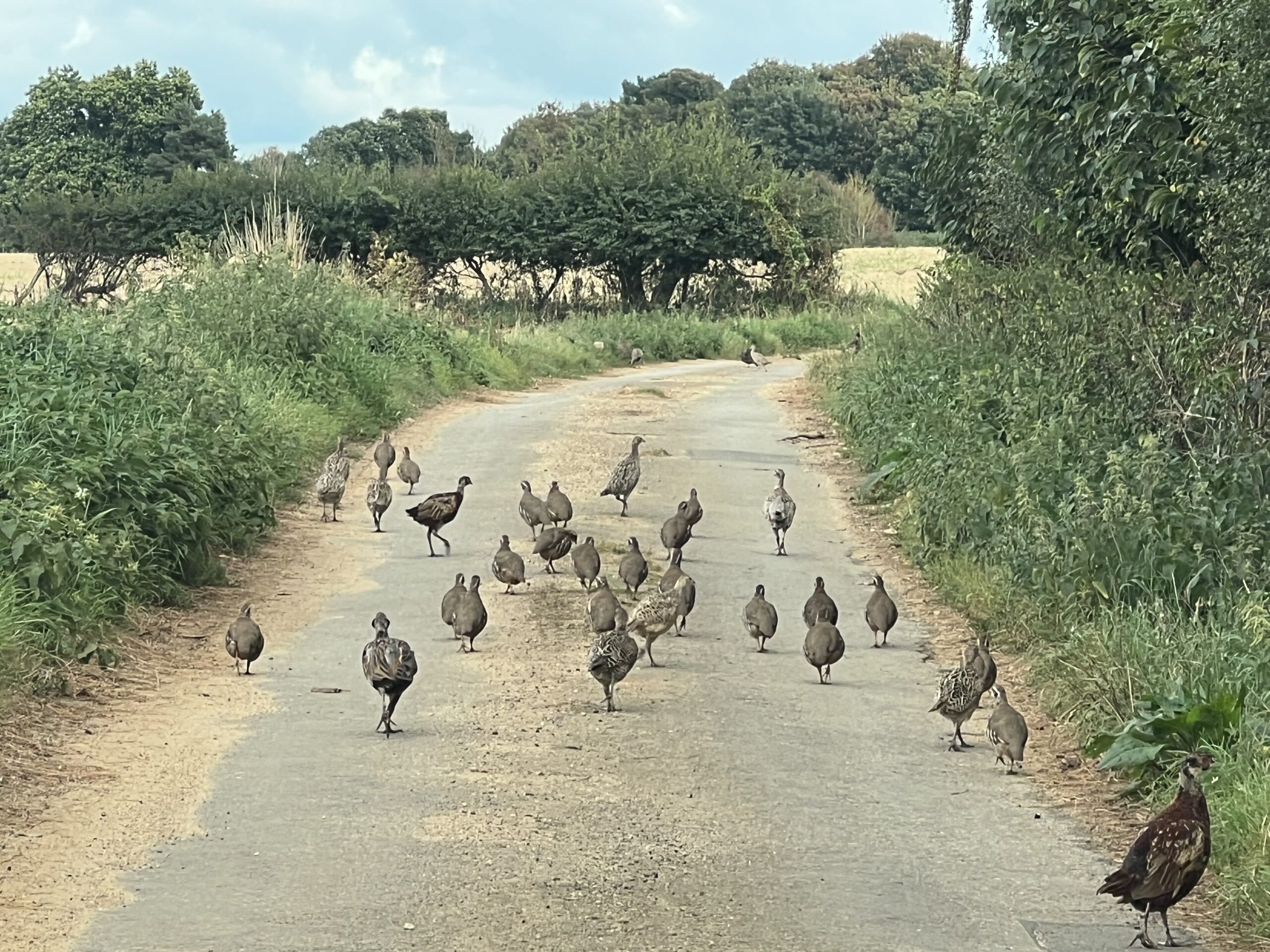
Gamebird releasing is when tens of millions of captive-reared, non-native Pheasants and Red-legged Partridges are released from enclosures (release pens) into the countryside to be shot for ‘sport’. This practice takes place predominately in late summer and early autumn ahead of the shooting season in lowland areas. In recent years some estates have adopted this form of gamebird shooting in upland areas of the UK.
Pheasants and Red-legged Partridges are both non-native species in the UK – Pheasants originating from Asia and Red-legged Partridges from south-west Europe. Despite some stating that these non-native species are naturalised in the UK, the vast majority of Pheasants and Red-legged Partridges encountered in the countryside have been captively-bred and released to create artificially high population numbers to provide a sufficient and predictable supply of birds to shoot.
Driven gamebird shooting became popular in the mid-19th century and replaced the more traditional walked-up shooting technique. Promoted by royalty and the social elite, driven shooting rapidly evolved into a popular social past-time for aristocratic society. Gamebirds are flushed into the air by groups of beaters and dogs, and driven towards a line of fixed positions, where people wait with guns. To meet the growing demand for Pheasants, artificial rearing techniques using brood hens were adopted and gamekeepers employed to protect released birds from any possible threat of predation. By the late 1800s driven Pheasant shooting was an established industry.
After the First and Second World Wars, with reduced demand, gamebird shooting declined. However, technological advances in the 1950s and 1960s brought about its resurgence, with industrial poultry rearing techniques, including automated commercial incubators, mechanical brooders and specialised heating, transforming the scale of Pheasant rearing. Not long after the mass rearing of Pheasants took off, the artificial rearing of Red-legged Partridges also began. These non-native species quickly filled the gap in shooting demand left by the catastrophic decline of the native Grey Partridge (a result of post-war agricultural intensification).
The industry rapidly developed across lowland areas of the UK from the 1960s, driven largely by economic stability, particularly in the 1980s. Data collated by the Game and Wildlife Conservation Trust (GWCT) show that the numbers of non-native birds released and the numbers shot have grown by around 900% for Pheasants and 6,395% for Red-legged Partridges (Aebischer, 2019). The scale of these releases is far greater than similar releases of non-native birds for hunting seen anywhere in Europe or North America.
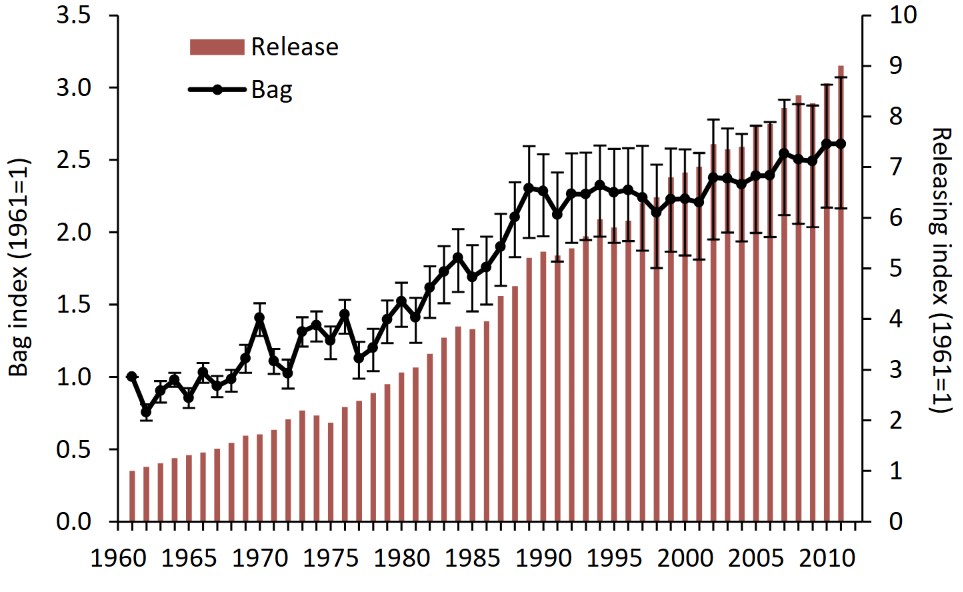
Graph 1: Index of Pheasant game bag data (the numbers of each quarry species shot annually) and numbers released from 1961 to 2011. Error bars represent 95% confidence intervals. (GWCT National Gamebird Census data).
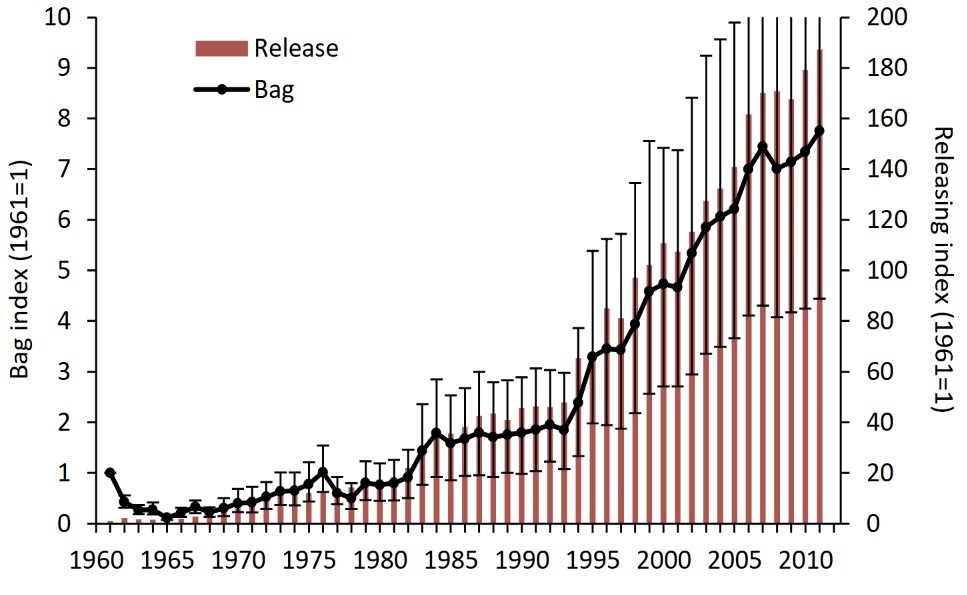
Graph 2: Index of Red-legged Partridge game bag data (the numbers of each quarry species shot annually) and numbers released from 1961 to 2011. Error bars represent 95% confidence intervals. (GWCT National Gamebird Census data).
A recent study which looked at the overall biomass (the combined weight) of non-native gamebirds, revealed that the number of non-native gamebirds (predominately Pheasants) released in the UK in autumn outweighs the entire population of the UK’s native breeding bird species in spring.
Every year, to ensure that there are plenty available to be shot during the shooting season, approximately 50 million Pheasants and 10 million Red-legged Partridges are released in the UK to roam the countryside. Of these 60 million non-native birds, around 30% are shot. Despite some claiming that these birds are shot ‘for the pot’, less than half of all of these shot birds are consumed by humans. The remainder are sold into the dog food market or discarded. Often large numbers of shot Pheasants and Red-legged Partridges have been found dumped on roadsides, buried or piled up in stink-pits (also known as middens) surrounded by snares, to act as bait for predators (particularly Foxes). Protected wildlife and domestic animals – including cats – often fall victim to this indiscriminate practice.
The 70% of non-native released gamebirds which avoid being shot are either predated, killed on roads, die of starvation or disease or survive to free-roam in the countryside. Some of these survivors are recaught and used to breed, to supplement the captive-reared population the following year and later released again to be shot. Although numbers fluctuate year on year, recent estimates by the British Trust for Ornithology (BTO) suggest that there are approximately 2.4 million breeding female Pheasants in the UK. These birds typically have a lifespan of 1-2 years.
The scale of this industry and its impact is huge, with Pheasants and/or Red-legged Partridges being released across the UK, with large parts of rural areas managed primarily for the rearing, releasing and shooting of these non-native birds. This pressure is particularly concentrated in England where 85% of all gamebird releases take place. At least 14% of all woodland in the UK is to some extent primarily managed for gamebirds. A country breakdown of woodland management has revealed that this accounts for around 5% of woods In Scotland and Wales and an astounding 28% in England, with one in 12 woodlands in England containing a Pheasant release pen.
A paper published in 2005 (Sage 2005) estimated that there was around 9,000 hectares of release pen. This equates to 1% of the total woodland area in England. Pheasant pens can vary greatly in size from just 0.1 hectare (1000m²) to up to 10 hectares (100,000m²).
Although the Game and Wildlife Conservation Trust (GWCT) recommend no more than 1,000 pheasants should be stocked per hectare of pen for bird welfare and to limit environmental damage, up to 8,000 birds per hectare have been recorded.
Red-legged Partridges are usually released from smaller closed-top pens located on arable land or grassland. These pens are usually around 0.01 hectare (100m²) in size and can contain anything from 50 to over 300 Partridges.
Despite there being lists of recommendations on pen sizes and stock density and a government ‘code of practice’ on how best to manage the rearing and release of these birds, as there is no specific legislation which regulates the breeding and rearing of gamebirds which are then shot, these guidelines can be easily ignored. As the government’s code of practice states: Failure to comply with a provision of this Code shall not of itself render you liable to proceedings of any kind.
To maximise gamebird survival and reduce natural mortality, landowners and managers will often carry out habitat management which can provide positive localised benefits for wildlife including planting cover crops, managing woodlands and hedgerows, creating rides and scrub. These efforts are made primarily to support gamebird management – providing cover for gamebirds. These beneficial management practices are often subsidised by government-funded agri-environment schemes.
In addition to habitat management, shooting estates will also carry out legal predator control to ‘protect’ livestock, which is how these released, captive-bred, non-native species are designated. . Under the conditions of the government’s General Licence system some protected bird species (e.g. Carrion Crow, Magpie) are trapped or shot. On some shooting estates, however, the law is often ignored by some who are willing to illegally kill birds of prey, including many rare and recovering species, to remove any potential threat of predation to gamebird stocks. A significant number of birds of prey have been shot, trapped or poisoned on Partridge and/or Pheasant shooting estates in recent years, with some incidents resulting in the conviction of the estate’s gamekeeper.
The annual influx of 50-60 million non-native gamebirds is having a detrimental impact, both directly and indirectly on species and the environment. These impacts are happening on a local level, damaging soil quality and reducing plant diversity, and are also affecting the dynamics of entire ecosystems and food webs. Evidence has shown that the sudden influxes of huge numbers of gamebirds in turn fuels generalist predator populations like Foxes, which results in increased predation risk to native species including ground nesting birds of high conservation concern. Pheasants and Red-legged Partridges also cause increased biosecurity and disease transmission risks including Highly Pathogenic Avian Influenza (Bird Flu), which both gamebird species are susceptible to contracting.
The mass rear and release of these omnivorous species also increases predation pressure on invertebrates and reptiles and causes direct competition with native species which rely on the same food resources.
Alongside these issues there is growing concern for the welfare of these gamebirds pre-release. As existing legislation for gamebirds is significantly weaker than those that apply to commercially farmed poultry, Pheasants and Red-legged Partridges can be subject to poor conditions and standards of care. Although battery laying cages for chickens have been banned in the UK and EU since 2012, these can be legally used for gamebird rearing. These conditions often result in stress, injury, feather damage, disease and poor physical state. In addition to their welfare during the rearing stages, Pheasants and Red-legged Partridges can also suffer stress and injury whilst being handled and during transportation.
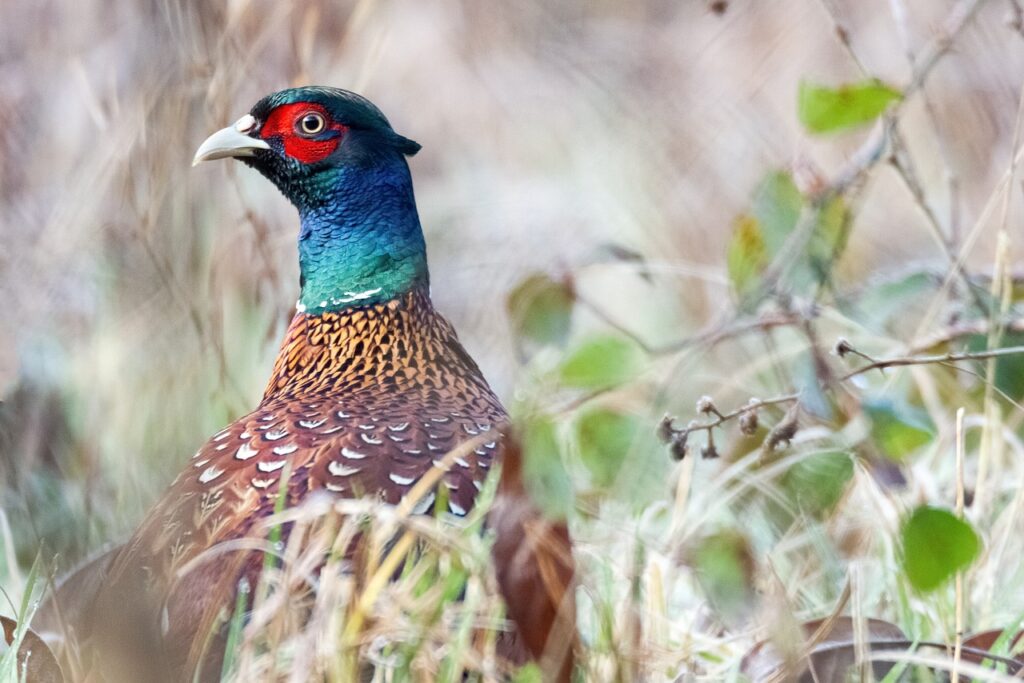
The deliberate mass release of non-native gamebirds poses a serious and ongoing threat to ecosystems, wildlife and habitats in the UK. In addition to environmental impacts, this practice raises significant concerns for the welfare of gamebirds during the rearing phase and also for predatory species which are legally killed under the general licence conditions. This practice is also associated with serious crimes with a significant number of bird of prey persecution incidents linked directly to rear and release shooting estates in recent years.
This largely unregulated industry has been impacting our natural environment and the species within it for decades. We believe the conservation of native species and ecosystems should take precedence over the interests of recreational shooting. Our long-term objective is to see an end to this practice altogether.