Wild Justice wins High Court ruling that Dartmoor commons have been mismanaged
Wild Justice wins High Court ruling that Dartmoor commons have been mismanaged
The High Court has ruled that Dartmoor commons have been mismanaged by Dartmoor Commoners’ Council (DCC), which did nothing to assess or prevent overgrazing resulting in the deterioration of important wildlife areas.
The claim was brought by environmental campaign group Wild Justice, which argued that DCC had failed to meet its legal responsibilities towards the conservation of the commons.
In a judgment handed down today, the High Court ruled that DCC has failed in its legal duty under the Dartmoor Commons Act 1985 (DCA) to assess the number of animals which should be allowed to graze on Dartmoor.
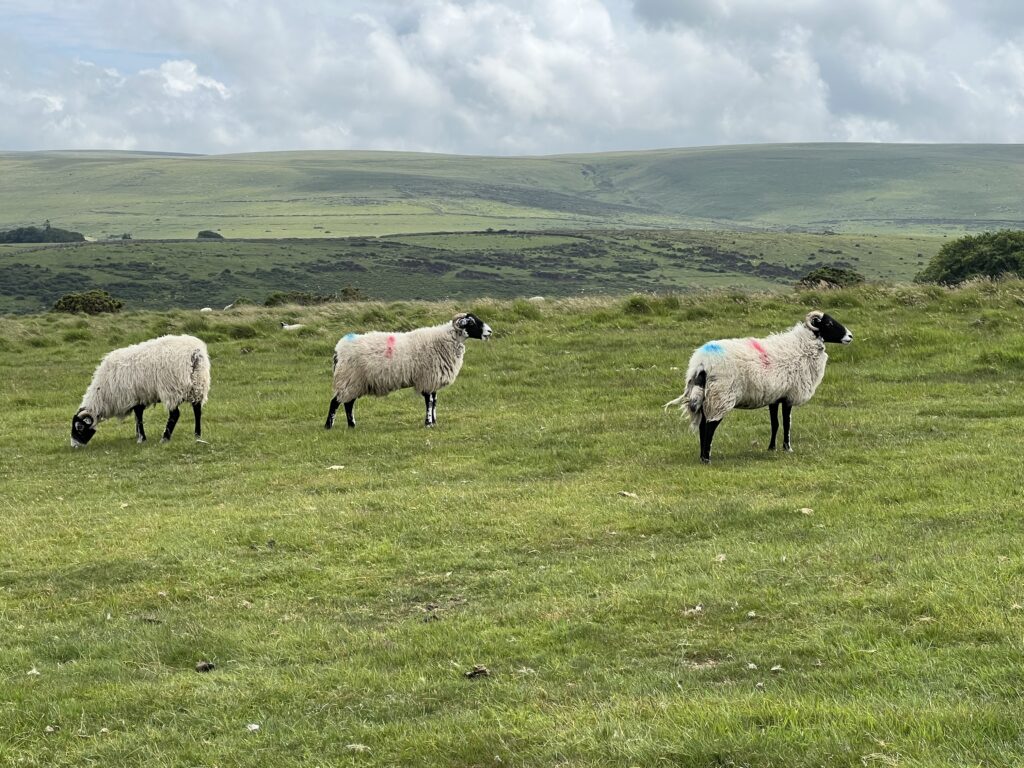
Dartmoor commons is an open area of land which covers more than two-thirds of Dartmoor National Park, spanning just under 36,000 hectares.
Some 850 landowners known as ‘commoners’ are allowed certain rights over the land, including grazing rights and the rights to keep sheep, cattle and ponies. These rights are granted under the DCA.
The DCA also contains statutory responsibilities that DCC has to ensure the conservation of the commons. Wild Justice argued DCC failed to meet these responsibilities, alongside general duties under wildlife laws and regulations.
In a July 2025 High Court hearing, Wild Justice successfully argued that DCC failed to make periodic assessments of which Dartmoor was becoming overstocked, contrary to section 4 of the DCA.
In a judgment handed down on 17 March 2026, Mr Justice Mould found:
“Assessment of the number of animals that may properly be depastured on the commons at any given time necessarily implies both quantitative and qualitative analysis. The question for the Defendant is whether stocking levels exceed the capacity of the commons properly to accommodate them. In order to address that question, among the matters which the Defendant needs to interrogate are the numbers of livestock which commoners are entitled to depasture on the commons, the numbers that are actually depastured in reliance on rights of common, the areas of common in respect of which those rights are enjoyed and exercised, seasonal variations, and so on.”
A 2023 assessment of Dartmoor commons (known as the Fursdon Review) published by the government had found that Dartmoor was “not in a good state”.
In assessing a number of Sites of Special Scientific Interest (SSSI) on the commons, the Fursdon Review found that many of them were in unfavourable condition. It was also noted that Natural England had identified reducing grazing stock numbers as a way to return these areas to a more favourable condition.
Wild Justice began its legal claim in July 2024, when the group sent a pre-action protocol to DCC detailing alleged issues with its management of the commons, citing the Fursdon Review.
From DCC’s response it was clear that it had not taken any steps to control livestock, leading to Wild Justice filing a judicial review challenge in August 2024.
In February 2025, the challenge was given the green light to proceed to the High Court, with a further two grounds given permission in April.
Bob Elliot, CEO of Wild Justice said: “This judgment shows that the Dartmoor Commoners’ Council failed to do the most basic of work needed in order to understand how many animals the Dartmoor Commons can sustain. When such an important landscape is already in very poor ecological condition, this simply isn’t good enough. The Dartmoor Commoners Council must now carry out the proper assessment required by law and ensure that Dartmoor is managed in a way that allows nature to recover. We will be scrutinising that assessment and, importantly, how DCC acts upon it in areas where overgrazing is apparent”.
Wild Justice were represented by Partner Ricardo Gama and Senior Environmental Solicitor Carol Day at Leigh Day and barristers David Wolfe KC (Matrix Chambers) and Jake Thorold (39 Essex Chambers).
Carol Day said: “Wild Justice is obviously pleased that the judge has found that Dartmoor Commoners’ Council has failed in its statutory duty to properly assess the number of livestock grazing on Dartmoor. It has been clear for years that overgrazing is one of the major issues leading to the ecological decline of Dartmoor’s important wildlife habitats. Wild Justice ‘s legal challenge means the Council must now comply with its minimum legal duties as the regulator of grazing levels on the commons. The Council must now urgently carry out a qualitative and quantitative assessment of the number of livestock on the commons so that it can consider whether it must take steps to reduce that number.”
For any media inquiries please email admin@wildjustice.org.uk